Every year, hundreds of thousands of people around the world lose their lives or become disabled in road accidents. To remember them globally, the third Sunday of November is observed each year as the World Day of Remembrance for Road Traffic Victims in collaboration with the World Health Organization and the United Nations. This year, this day is being observed on 15 November. Chhipa ambulances and Chhipa Welfare volunteers daily shift countless people injured in traffic accidents to hospitals, among whom some die on the spot and some pass away during treatment in the hospital. As a social worker, on the World Day of Remembrance for Road Traffic Victims, I offer my condolences for those who lost their lives, and all my sympathies are with the bereaved families whose loved ones were separated from them forever in these accidents, and I also express my sympathy with those injured who had to face disability in these accidents.
The World Day of Remembrance for Road Traffic Victims was first initiated in 1993 by the British road accident charity project Road Peace, and it was later formally recognized by the United Nations in 2005. As a social worker, I would like to appeal to every citizen of the world that this day should not merely be about lighting candles to remember the victims, but this must also be a day to reflect on why our roads are turning into graveyards. According to the World Health Organization, around 1.2 million people die and tens of millions are injured in road accidents across the world every year. Every twenty-fourth second someone loses their life on the road, and the majority of them belong to the age group of 15 to 30 years, meaning that the very age which is the future of any nation is being ruined on our roads.
In Pakistan, the situation is even more alarming. Here, the lights of countless families are extinguished every single day. From Karachi to Azad Kashmir, not a single day passes when the news of a road accident is not published in the newspapers. Sometimes a speeding dumper crushes a motorcyclist, sometimes an overloaded bus falls into a ravine, and sometimes young men on motorcycles lose their lives without wearing a helmet. Blaming this on fate is not the solution to the problem, rather it is the result of our collective negligence. We have made over-speeding a custom, breaking traffic signals has become a norm for us, wearing a helmet feels like a burden, and fastening a seat belt feels against our pride. Driving while talking on a mobile phone, doing one-wheeling, and coming from the wrong side are the factors that cause traffic accidents daily and extinguish the lights of many families.
The World Day of Remembrance for Road Traffic Victims provides us with the golden opportunity to realize that we must not only express regret but also take action. Teach your children the etiquettes of road crossing. Wear a helmet so that your children wear one too. Keep your speed under control, and never drive if you are in a state of drowsiness or under the influence of intoxicants. Give way to ambulances, as these small actions can save a precious life. In every city where hundreds of thousands of people take to the streets, abiding by traffic rules is not merely a legal obligation, it is a service to humanity. Come, on the occasion of the World Day of Remembrance for Road Traffic Victims, let us solemnly pledge to ourselves that we will fulfill our responsibility regarding road safety to save precious lives, because those who have gone will never return, but those who are still here can at least be saved by us.
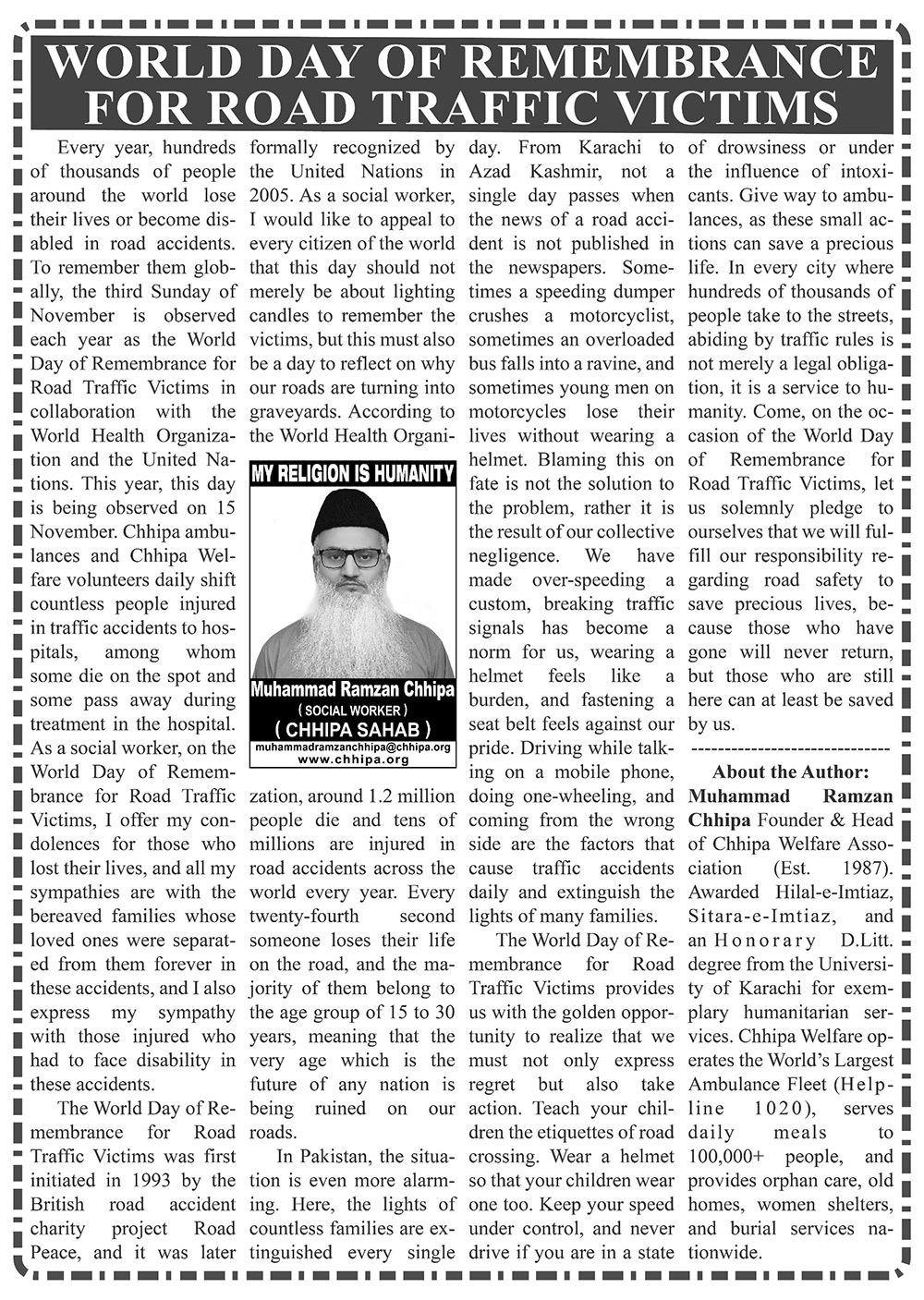
About the Author: Muhammad Ramzan Chhipa
Founder & Head of Chhipa Welfare Association (Est. 1987). Awarded Hilal-e-Imtiaz, Sitara-e-Imtiaz, and an Honorary D.Litt. degree from the University of Karachi for exemplary humanitarian services. Chhipa Welfare operates the World’s Largest Ambulance Fleet (Helpline 1020), serves daily meals to 100,000+ people, and provides orphan care, old homes, women shelters, and burial services nationwide.
دنیا بھر میں ہر سال لاکھوں افراد روڈ سڑک حادثات میں جان کی بازی ہار جاتے ہیں یا معذور ہو جاتے ہیں ، اُنہیں عالمی سطح پر یاد رکھنے کیلئے عالمی ادارہ صحت اور اقوام متحدہ کے تعاون سے ہر سال نومبر کے تیسرے اتوار کو ”روڈ ایکسیڈنٹ کے متاثرین کو یاد رکھنے کا عالمی دن “ منایا جاتا ہے۔ اِس سال یہ دن 15 نومبر کو منایا جا رہا ہے۔ چھیپا ایمبولینسیں اور چھیپا ویلفیئر کے رضاکار روزانہ ٹریفک حادثات میں زخمی ہونے والے بے شمار متاثرین کو اسپتال منتقل کرتے ہیں جن میں سے بعض زخمی موقع پر ہی یا پھر اسپتال میں دورانِ علاج جاں بحق بھی ہوجاتے ہیں ۔بطور سماجی کارکن میں روڈ ایکسیڈنٹ کے متاثرین کے عالمی دن پر جاں بحق ہونے والوں کیلئے اظہار تعزیت کرتا ہوں اور میری تمام تر ہمدردیاں اُن سوگوار خاندانوں کے ساتھ ہیں جن کے پیارے اِن حادثات میں اُن سے ہمیشہ کیلئے جدا ہو گئے اور اُن زخمیوں سے بھی اظہارِ ہمدردی کرتا ہوں جنہیں اِن حادثات میں معذوری کا سامنا کرنا پڑا۔
”روڈ ایکسیڈنٹ کے متاثرین کو یاد رکھنے کا عالمی دن ‘ کا آغاز سب سے پہلے 1993میں برطانوی روڈ ایکسیڈنٹ چیریٹی پروجیکٹ“Road Peace”نے کیا تھا، جسے بعد میں 2005میں اقوام متحدہ نے باضابطہ طور پر تسلیم کر لیا۔بطور سماجی کارکن میں دنیا کے ہر شہری سے یہ اپیل کرنا چاہتا ہوں کہ یہ دن صرف موم بتیاں جلاکر متاثرین کو یاد کرنے کا دن نہیں ہونا چاہیے ، بلکہ یہ دن اس بات پر غوروفکر کرنے کا دن بھی ہے کہ آخر ہماری سڑکیں قبرستان کیوں بنتی جا رہی ہیں ؟عالمی ادارہ صحت کے مطابق دنیا میں ہر سال تقریبا 12 لاکھ افراد سڑک حادثات میں ہلاک ہوتے ہیں اور کروڑوں زخمی ہوتے ہیں ۔ ہر 24 سیکنڈ میں دنیا میں کہیں نہ کہیں کوئی ایک انسان سڑک پر جان کی بازی ہار جاتا ہے۔ ان میں سب سے زیادہ تعداد 15 سے 30 سال کے نوجوانوں کی ہے یعنی وہ عمر جو کسی بھی قوم کا مستقبل ہوتی ہے، وہی سب سے زیادہ سڑکوں پر برباد ہو رہی ہے۔
پاکستان میں صورتحال اس سے بھی زیادہ تشویشناک ہے۔ یہاں ہر روز بے شمار خاندانوں کے چراغ بجھ جاتے ہیں ۔ کراچی سے لے کرآزاد کشمیر تک کوئی دن ایسا نہیں گزرتا جب اخبار میں کسی حادثے کی خبر شائع نہ ہوتی ہو۔ کبھی تیز رفتار ڈمپر کسی موٹر سائیکل سوار کو کچل دیتا ہے، کبھی اوور لوڈ بس کھائی میں گر جاتی ہے، کبھی موٹر سائیکل پر نوجوان بغیر ہیلمٹ کے جان کی بازی ہار جاتے ہیں ۔ اِسے قسمت پر ڈالنا مسئلے کا حل نہیں بلکہ یہ ہماری اجتماعی غفلت کا نتیجہ ہے۔ہم نے تیزرفتاری کو رواج بنا لیا ہے، سگنل توڑنا ہمارے لیے معمول بن گیا ہے، ہیلمٹ پہننا ہمیں بوجھ لگتا ہے، سیٹ بیلٹ باندھنا ہمیں اپنی شان کے خلاف لگتا ہے، موبائل پر بات کرتے ہوئے گاڑی چلانا، ون ویلنگ کرنا، غلط سائیڈ سے آنا، یہ وہ عوامل ہیں جو روزانہ ٹریفک حادثات کا سبب بنتے ہیں اور کئی خاندانوں کے چراغ گُل کر د یتے ہیں ۔
”روڈ ایکسیڈنٹ کے متاثرین کو یاد رکھنے کا عالمی دن “ ہمیں آگہی کا یہ سنہری موقع بھی فراہم کرتا ہے کہ ہمیں صرف افسوس نہیں کرنابلکہ عمل بھی کرنا ہے۔ اپنے بچوں کو سڑک پار کرنے کے آداب سکھائیں ۔ خود ہیلمٹ پہنیں تاکہ آپ کے بچے بھی پہنیں ۔ رفتار کو قابو میں رکھیں ۔ نیند اور نشے کی حالت میں کبھی گاڑی نہ چلائیں ۔ ایمبولینس کو راستہ دیں ۔ یہ چھوٹی چھوٹی باتیں کسی کی قیمتی جان بچا سکتی ہیں ۔ہر شہر میں جہاں روزانہ لاکھوں لوگ سڑکوں پر نکلتے ہیں ، وہاں ٹریفک قوانین پر عمل کرنا صرف قانون کی پابندی نہیں ، انسانیت کی خدمت ہے۔آئیے، ”روڈ ایکسیڈنٹ کے متاثرین کو یاد رکھنے کے عالمی دن “ پر ہم یہ عہد کریں کہ ہم روڈ سیفٹی کے حوالے سے اپنی ذمہ داری ادا کریں گے تاکہ اپنی اور دوسروں کی قیمتی جان بچائی جا سکے ، کیونکہ جو چلا گیا، وہ تو واپس نہیں آئے گا، لیکن جو باقی ہیں ، انہیں تو ہم بچا سکتے ہیں ۔
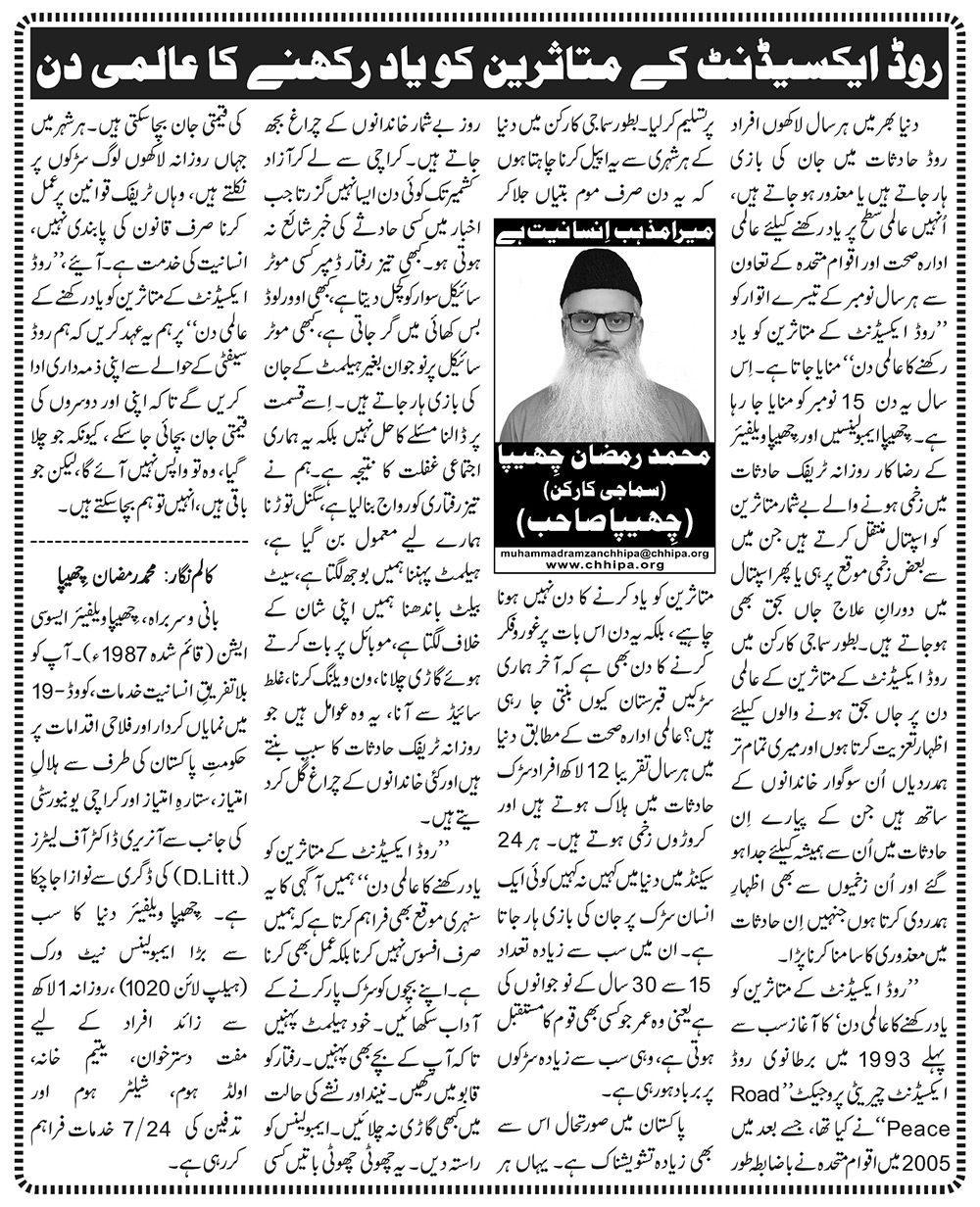
کالم نگار: محمد رمضان چھیپا
بانی و سربراہ، چھیپا ویلفیئر ایسوسی ایشن (قائم شدہ 1987ء)۔ آپ کو بلا تفریقِ انسانیت خدمات، کووڈ-19 میں نمایاں کردار اور فلاحی اقدامات پر حکومتِ پاکستان کی طرف سے ہلالِ امتیاز، ستارہِ امتیاز اور کراچی یونیورسٹی کی جانب سے آنریری ڈاکٹر آف لیٹرز (D.Litt.) کی ڈگری سے نوازا جا چکا ہے۔ چھیپا ویلفیئر دنیا کا سب سے بڑا ایمبولینس نیٹ ورک (ہیلپ لائن 1020)، روزانہ 1 لاکھ سے زائد افراد کے لیے مفت دسترخوان، یتیم خانہ، اولڈ ہوم، شیلٹر ہوم اور تدفین کی 24/7 خدمات فراہم کر رہی ہے۔

Spread the loveSpread the love
Spread the love Spread the love
Spread the love Spread the love


